
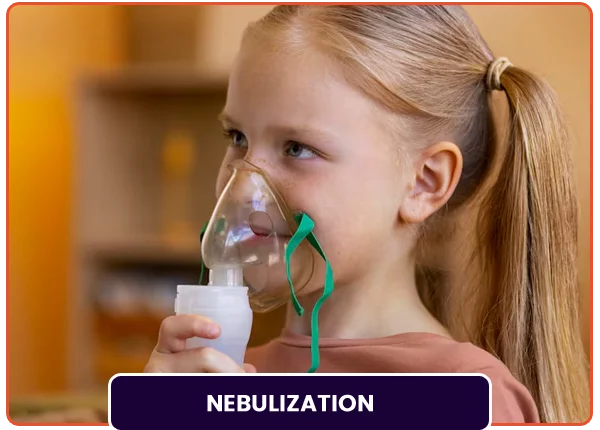
Nebulization
Nebulization is a simple and effective medical treatment used to deliver medication directly into the lungs in the form of a fine mist. It is commonly used for patients suffering from respiratory conditions such as asthma, bronchitis, wheezing, allergies, and other breathing difficulties. If you are looking for safe and effective Nebulization in Ghaziabad, Dr. Gaurav Mishra provides expert respiratory care for infants, children, and adults to ensure quick relief and improved breathing.
Nebulization is especially useful in emergencies or when patients are unable to take oral medications or use inhalers properly. It helps open the airways, reduce inflammation, and make breathing easier within minutes.
What is Nebulization?
Nebulization is a medical procedure that converts liquid medicine into a mist using a nebulizer machine. This mist is inhaled through a mask or mouthpiece, allowing the medicine to directly reach the lungs.
The treatment is commonly used to:
- Open narrowed airways
- Reduce inflammation in the lungs
- Loosen thick mucus
- Improve oxygen flow
- Provide quick relief from breathing difficulty
Nebulization is widely used in pediatric and emergency care due to its fast action and ease of use.
When is Nebulization Needed?
Dr. Gaurav Mishra recommends nebulization for various respiratory conditions, including:
- Asthma attacks
- Wheezing and chest tightness
- Bronchitis
- Chronic obstructive pulmonary disease (COPD)
- Allergic respiratory reactions
- Cough with mucus
- Upper respiratory infections
- Pneumonia (supportive treatment)
- Breathing difficulty in children
- Croup in infants and toddlers
It is especially helpful when a patient is experiencing acute breathing distress and requires immediate relief.
How Does Nebulization Work?
Nebulization works by turning liquid medication into a fine mist that can be inhaled deeply into the lungs.
The process involves:
- Adding prescribed medicine to the nebulizer chamber
- Connecting the mask or mouthpiece
- Turning on the machine to produce mist
- Inhaling the medication slowly and deeply
- Allowing the medicine to reach the airway and lungs
The medication acts directly on the respiratory tract, providing faster relief compared to oral medicines.
Benefits of Nebulization
Nebulization offers several important health benefits, especially for respiratory patients:
- Quick relief from breathing difficulty
- Direct delivery of medicine to lungs
- Effective in emergencies
- Helps loosen mucus and clear airways
- Reduces wheezing and chest tightness
- Suitable for infants, children, and elderly patients
- Easy to use at home under medical guidance
- Improves oxygen intake
- Reduces severity of asthma and allergic attacks
- Minimizes hospitalization in many cases
Because of its rapid action, nebulization is a preferred treatment in pediatric and emergency respiratory care.
Nebulization for Children
Children often face respiratory infections and breathing issues due to underdeveloped immunity. Nebulization is especially helpful in:
- Wheezing in infants
- Asthma in children
- Severe cold and cough
- Bronchiolitis
- Croup cough
- Allergic reactions affecting breathing
At Dr. Gaurav Mishra’s clinic in Ghaziabad, pediatric nebulization is performed safely using child-friendly masks and appropriate medication dosages.
Parents are also guided on:
- Correct nebulizer usage at home
- Cleaning and maintenance of the machine
- Identifying symptoms that need urgent care
- Preventing recurring respiratory infections
Types of Medicines Used in Nebulization
Common medications used under medical supervision include:
- Bronchodilators (to open airways)
- Steroids (to reduce inflammation)
- Saline solutions (to loosen mucus)
- Combination therapies for severe asthma
⚠️ Medication is always prescribed based on the patient’s condition and age. Self-medication is not recommended.
Procedure of Nebulization Treatment
At Dr. Gaurav Mishra’s clinic, the procedure is done in a safe and controlled environment:
- Patient assessment and breathing evaluation
- Selection of appropriate medication
- Proper dose preparation
- Nebulization session for 5–15 minutes
- Monitoring of breathing improvement
- Post-treatment advice and follow-up
The process is painless and provides quick relief in most cases.
Side Effects of Nebulization
Nebulization is generally safe, but mild side effects may include:
- Slight throat irritation
- Dry mouth
- Temporary tremors (rare)
- Mild dizziness
- Increased heart rate (in some cases)
These effects are usually temporary and resolve quickly. Proper medical supervision reduces risks significantly.
Precautions During Nebulization
To ensure safe and effective treatment:
- Always use prescribed medicines only
- Clean nebulizer after every use
- Use sterile water or saline if advised
- Do not share nebulizer masks
- Follow dosage instructions carefully
- Seek medical help if symptoms worsen
Proper care ensures better results and prevents infections.
Signs You Need Nebulization
You should consult a doctor if you experience:
- Continuous wheezing
- Difficulty in breathing
- Chest tightness
- Persistent cough with mucus
- Shortness of breath
- No improvement with oral medicines
- Rapid breathing in children
Early treatment can prevent serious respiratory complications.
Why Choose Dr. Gaurav Mishra for Nebulization in Ghaziabad?
Dr. Gaurav Mishra provides expert respiratory care with a focus on safe and effective treatment for all age groups.
Key reasons to choose include:
- Expert pediatric and respiratory care
- Accurate diagnosis of breathing problems
- Safe nebulization procedures
- Child-friendly treatment approach
- Emergency respiratory support
- Personalized treatment plans
- Guidance for home nebulization use
- Focus on long-term respiratory health
Every patient receives careful monitoring to ensure fast recovery and comfort.
Conclusion
Nebulization is one of the most effective treatments for quick relief from respiratory conditions such as asthma, wheezing, and severe cough. It delivers medicine directly to the lungs, making breathing easier within minutes. With expert Nebulization in Ghaziabad, Dr. Gaurav Mishra ensures safe, accurate, and compassionate care for both children and adults.
If you or your child is facing breathing difficulties, timely consultation and treatment can make a significant difference in recovery and long-term lung health.
FAQs
1. What is nebulization used for?
Nebulization is used to treat breathing problems like asthma, wheezing, bronchitis, and severe cough by delivering medicine directly to the lungs.
2. Is nebulization safe for children?
Yes, nebulization is safe for children when used under a doctor’s supervision with proper medication and dosage.
3. How long does a nebulization session take?
A typical nebulization session lasts between 5 to 15 minutes depending on the medication and severity of the condition.
4. Can nebulization be done at home?
Yes, home nebulization is possible using a prescribed nebulizer machine and doctor-recommended medicines.
5. What are the side effects of nebulization?
Side effects are usually mild and may include throat irritation, dry mouth, or slight dizziness in some cases.
Nebulization is a simple and effective medical treatment used to deliver medication directly into the lungs in the form of a fine mist. It is commonly used for patients suffering from respiratory conditions such as asthma, bronchitis, wheezing, allergies, and other breathing difficulties. If you are looking for safe and effective Nebulization in Ghaziabad, Dr. Gaurav Mishra provides expert respiratory care for infants, children, and adults to ensure quick relief and improved breathing.
Nebulization is especially useful in emergencies or when patients are unable to take oral medications or use inhalers properly. It helps open the airways, reduce inflammation, and make breathing easier within minutes.
What is Nebulization?
Nebulization is a medical procedure that converts liquid medicine into a mist using a nebulizer machine. This mist is inhaled through a mask or mouthpiece, allowing the medicine to directly reach the lungs.
The treatment is commonly used to:
- Open narrowed airways
- Reduce inflammation in the lungs
- Loosen thick mucus
- Improve oxygen flow
- Provide quick relief from breathing difficulty
Nebulization is widely used in pediatric and emergency care due to its fast action and ease of use.
When is Nebulization Needed?
Dr. Gaurav Mishra recommends nebulization for various respiratory conditions, including:
- Asthma attacks
- Wheezing and chest tightness
- Bronchitis
- Chronic obstructive pulmonary disease (COPD)
- Allergic respiratory reactions
- Cough with mucus
- Upper respiratory infections
- Pneumonia (supportive treatment)
- Breathing difficulty in children
- Croup in infants and toddlers
It is especially helpful when a patient is experiencing acute breathing distress and requires immediate relief.
How Does Nebulization Work?
Nebulization works by turning liquid medication into a fine mist that can be inhaled deeply into the lungs.
The process involves:
- Adding prescribed medicine to the nebulizer chamber
- Connecting the mask or mouthpiece
- Turning on the machine to produce mist
- Inhaling the medication slowly and deeply
- Allowing the medicine to reach the airway and lungs
The medication acts directly on the respiratory tract, providing faster relief compared to oral medicines.
Benefits of Nebulization
Nebulization offers several important health benefits, especially for respiratory patients:
- Quick relief from breathing difficulty
- Direct delivery of medicine to lungs
- Effective in emergencies
- Helps loosen mucus and clear airways
- Reduces wheezing and chest tightness
- Suitable for infants, children, and elderly patients
- Easy to use at home under medical guidance
- Improves oxygen intake
- Reduces severity of asthma and allergic attacks
- Minimizes hospitalization in many cases
Because of its rapid action, nebulization is a preferred treatment in pediatric and emergency respiratory care.
Nebulization for Children
Children often face respiratory infections and breathing issues due to underdeveloped immunity. Nebulization is especially helpful in:
- Wheezing in infants
- Asthma in children
- Severe cold and cough
- Bronchiolitis
- Croup cough
- Allergic reactions affecting breathing
At Dr. Gaurav Mishra’s clinic in Ghaziabad, pediatric nebulization is performed safely using child-friendly masks and appropriate medication dosages.
Parents are also guided on:
- Correct nebulizer usage at home
- Cleaning and maintenance of the machine
- Identifying symptoms that need urgent care
- Preventing recurring respiratory infections
Types of Medicines Used in Nebulization
Common medications used under medical supervision include:
- Bronchodilators (to open airways)
- Steroids (to reduce inflammation)
- Saline solutions (to loosen mucus)
- Combination therapies for severe asthma
⚠️ Medication is always prescribed based on the patient’s condition and age. Self-medication is not recommended.
Procedure of Nebulization Treatment
At Dr. Gaurav Mishra’s clinic, the procedure is done in a safe and controlled environment:
- Patient assessment and breathing evaluation
- Selection of appropriate medication
- Proper dose preparation
- Nebulization session for 5–15 minutes
- Monitoring of breathing improvement
- Post-treatment advice and follow-up
The process is painless and provides quick relief in most cases.
Side Effects of Nebulization
Nebulization is generally safe, but mild side effects may include:
- Slight throat irritation
- Dry mouth
- Temporary tremors (rare)
- Mild dizziness
- Increased heart rate (in some cases)
These effects are usually temporary and resolve quickly. Proper medical supervision reduces risks significantly.
Precautions During Nebulization
To ensure safe and effective treatment:
- Always use prescribed medicines only
- Clean nebulizer after every use
- Use sterile water or saline if advised
- Do not share nebulizer masks
- Follow dosage instructions carefully
- Seek medical help if symptoms worsen
Proper care ensures better results and prevents infections.
Signs You Need Nebulization
You should consult a doctor if you experience:
- Continuous wheezing
- Difficulty in breathing
- Chest tightness
- Persistent cough with mucus
- Shortness of breath
- No improvement with oral medicines
- Rapid breathing in children
Early treatment can prevent serious respiratory complications.
Why Choose Dr. Gaurav Mishra for Nebulization in Ghaziabad?
Dr. Gaurav Mishra provides expert respiratory care with a focus on safe and effective treatment for all age groups.
Key reasons to choose include:
- Expert pediatric and respiratory care
- Accurate diagnosis of breathing problems
- Safe nebulization procedures
- Child-friendly treatment approach
- Emergency respiratory support
- Personalized treatment plans
- Guidance for home nebulization use
- Focus on long-term respiratory health
Every patient receives careful monitoring to ensure fast recovery and comfort.
Conclusion
Nebulization is one of the most effective treatments for quick relief from respiratory conditions such as asthma, wheezing, and severe cough. It delivers medicine directly to the lungs, making breathing easier within minutes. With expert Nebulization in Ghaziabad, Dr. Gaurav Mishra ensures safe, accurate, and compassionate care for both children and adults.
If you or your child is facing breathing difficulties, timely consultation and treatment can make a significant difference in recovery and long-term lung health.
FAQs
1. What is nebulization used for?
Nebulization is used to treat breathing problems like asthma, wheezing, bronchitis, and severe cough by delivering medicine directly to the lungs.
2. Is nebulization safe for children?
Yes, nebulization is safe for children when used under a doctor’s supervision with proper medication and dosage.
3. How long does a nebulization session take?
A typical nebulization session lasts between 5 to 15 minutes depending on the medication and severity of the condition.
4. Can nebulization be done at home?
Yes, home nebulization is possible using a prescribed nebulizer machine and doctor-recommended medicines.
5. What are the side effects of nebulization?
Side effects are usually mild and may include throat irritation, dry mouth, or slight dizziness in some cases.
Category : Nebulization


